Perception & Traversability, FieldAI · Tokyo, Japan
I make robots see, hear, and act.
Robotics researcher and engineer working across multi-modal perception, traversability, Vision-Language-Action models, and production ROS 2 systems — from acoustic sensing research to field deployment.
System core · Sony AI
Project ACE
Robotic table tennis at the limits of real-time perception, prediction, and control.
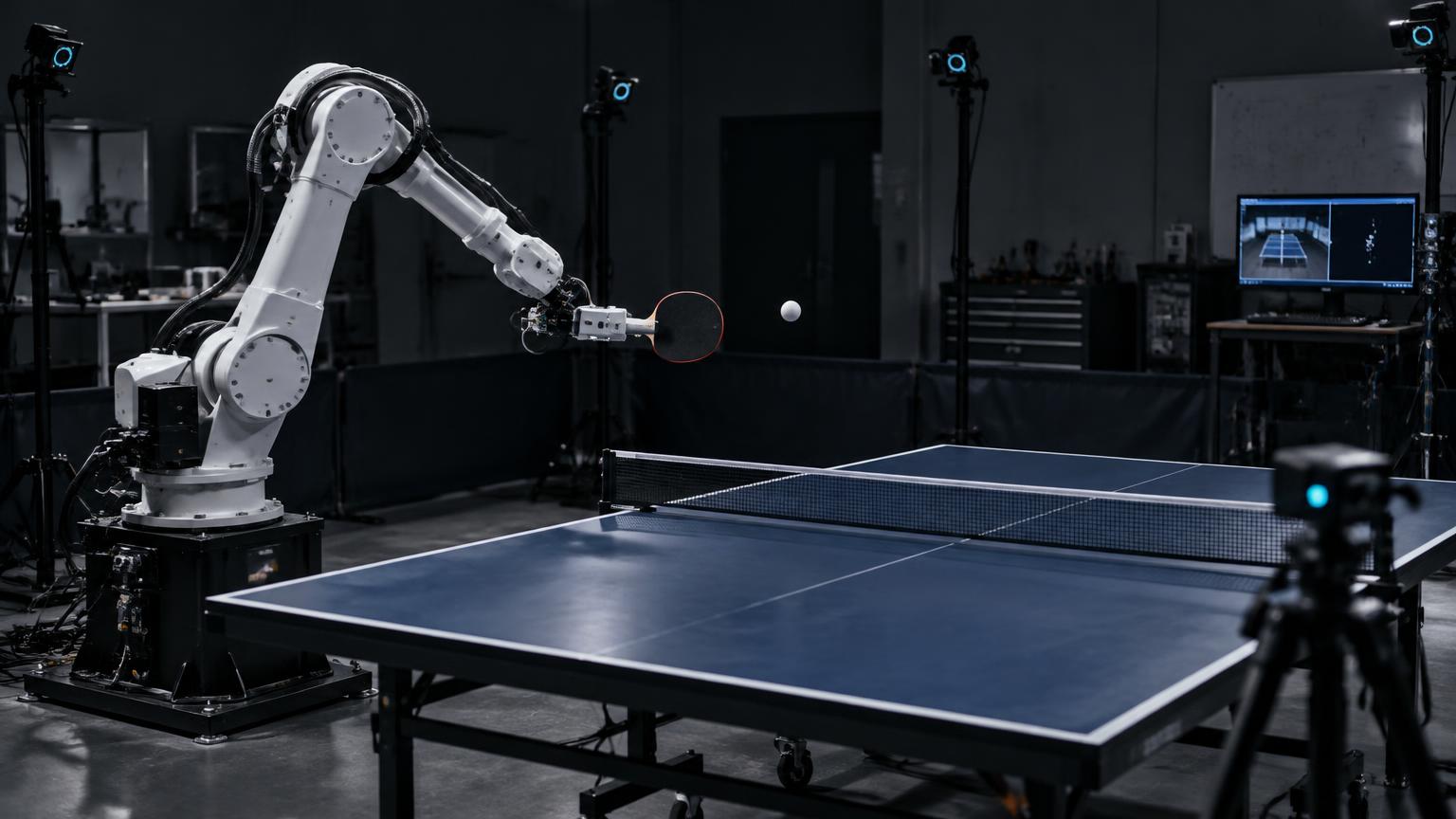
Outplaying elite table tennis players with an autonomous robot
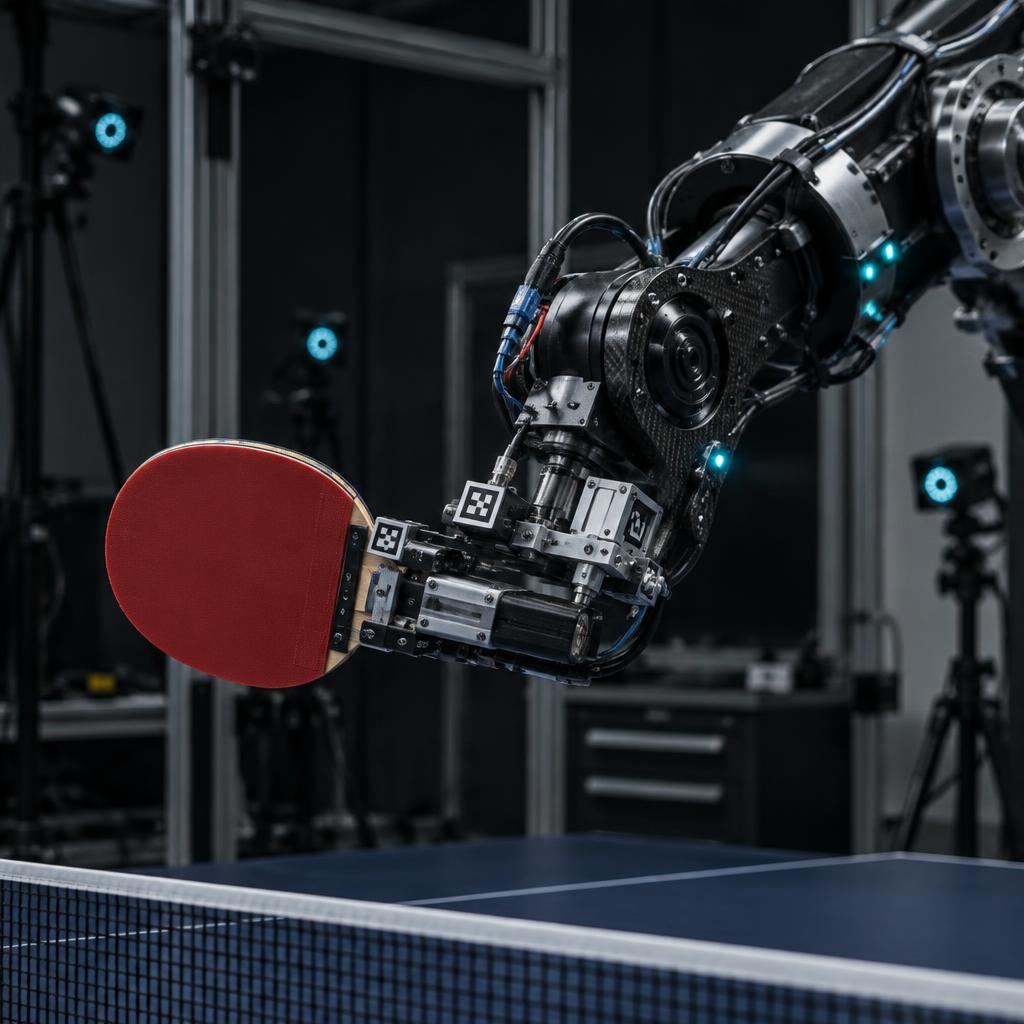
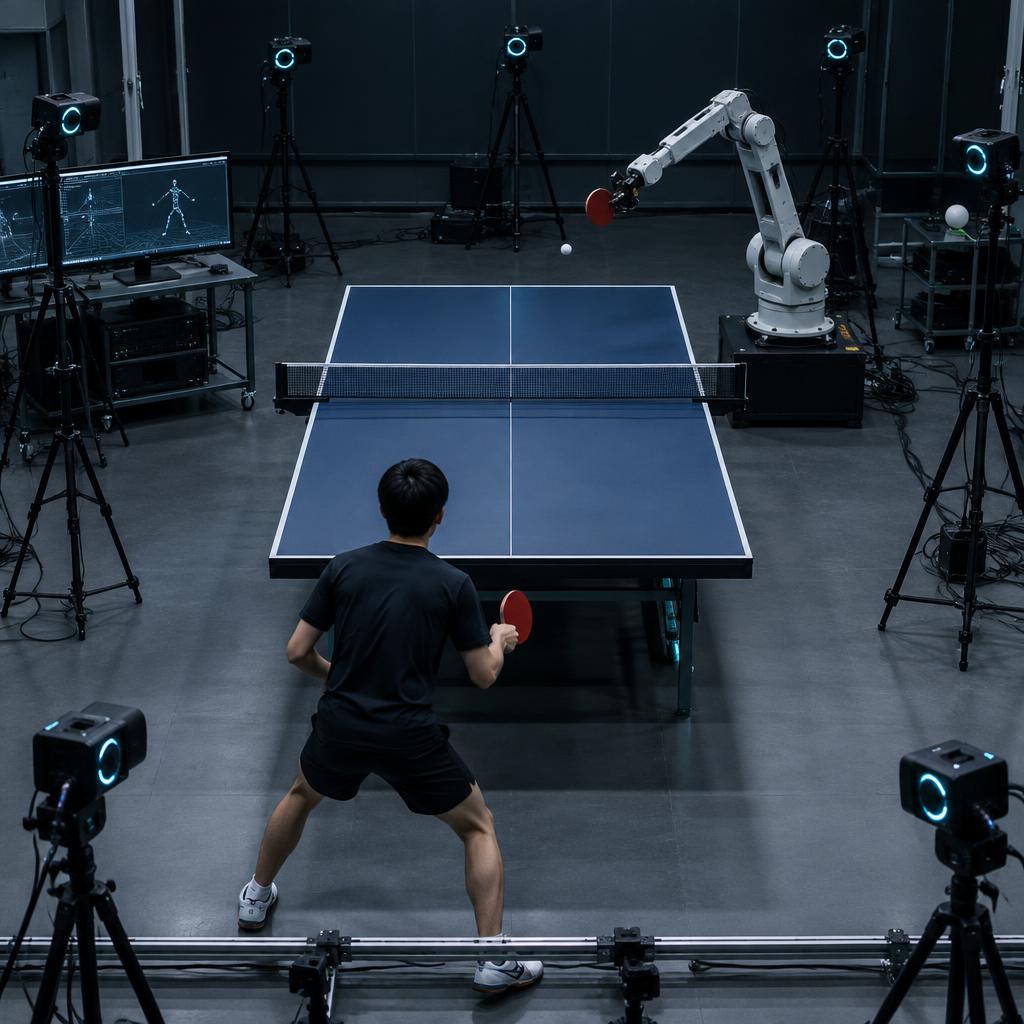
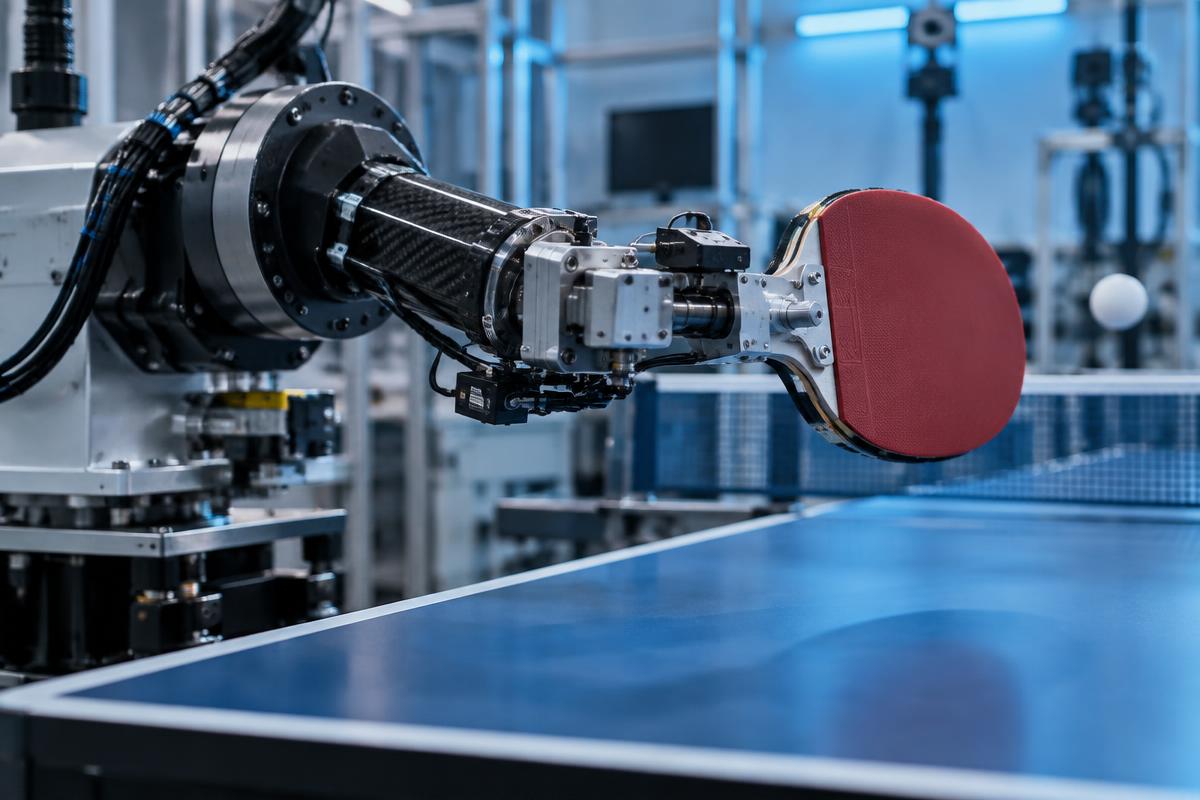
Concept visualizations are clearly marked and ready to be replaced by approved Project ACE media.
~50x
Segmentation speed-up
0.2 → 10 FPS in ROS 2
16-ch
Microphone array
OccluNet acoustic rig
40
Teleop episodes
Bimanual VLA dataset
6+ yrs
Robotics experience
Japan-based, field-tested
Featured publication
Outplaying elite table tennis players with an autonomous robot
[FULL AUTHOR LIST — CONFIRM AUTHOR POSITION]
My contribution
Contributor to Sony AI's Project Ace. [ADD 2–3 SENTENCE CONTRIBUTION STATEMENT AND DOI]
Selected systems
From research question to field result
From an academic question to a model, from a model to a ROS node, from a ROS node to a robot, and from a robot to a measurable field result.
OccluNet — acoustic detection of occluded objects
Neural audio method that detects both the occluder and the object hidden behind it using a 16-channel microphone array.
Case study →ManipulationBimanual VLA manipulation on OpenArm
Full teleoperation-to-policy pipeline bringing a generalist Vision-Language-Action model to a new bimanual arm with very little data.
Case study →Field roboticsTraversability benchmarking for field robots
A repeatable benchmark for comparing traversability and risk maps across algorithms and real field sites.
Case study →Research direction
A single arc, not a pile of demos
Field-robust perception
Traversability and semantic understanding for robots in unstructured outdoor environments, where sensor models drift and terrain breaks assumptions.
Vision-Language-Action models & learned manipulation
Embodiment transfer and fine-tuning generalist policies on small real-robot datasets collected through teleoperation.
Multi-modal & non-visual sensing
Acoustic perception for occluded and non-line-of-sight scenes, plus fusion of audio, LiDAR, and vision for scene understanding.
About
Building robot brains in Tokyo
Apurv Saha is a robotics engineer in Tokyo working on perception and traversability for field robots. He previously contributed to Sony AI's Project Ace, a reinforcement-learning robotic table-tennis system published in Nature, and built warehouse perception at Rapyuta Robotics and construction-machinery autonomy at DeepX. His M.Eng research at Tokyo Institute of Technology (Nakadai Lab) produced OccluNet, a neural acoustic method that detects objects hidden behind occluders using a 16-channel microphone array.